
Field Trip: Visiting Manos del Uruguay Head Office in Montevideo
While on her honeymoon in South America last January, our Programs and Communications Manager, Lidiya Beida, couldn’t resist the opportunity to visit Manos del Uruguay—a legendary artisan cooperative that has championed wool since its founding in 1968 and collaborated with countless household-name fashion brands. In these field notes, Lidiya takes us behind the scenes to where the magic of Uruguayan wool—some of the most prized in the world—comes to life.
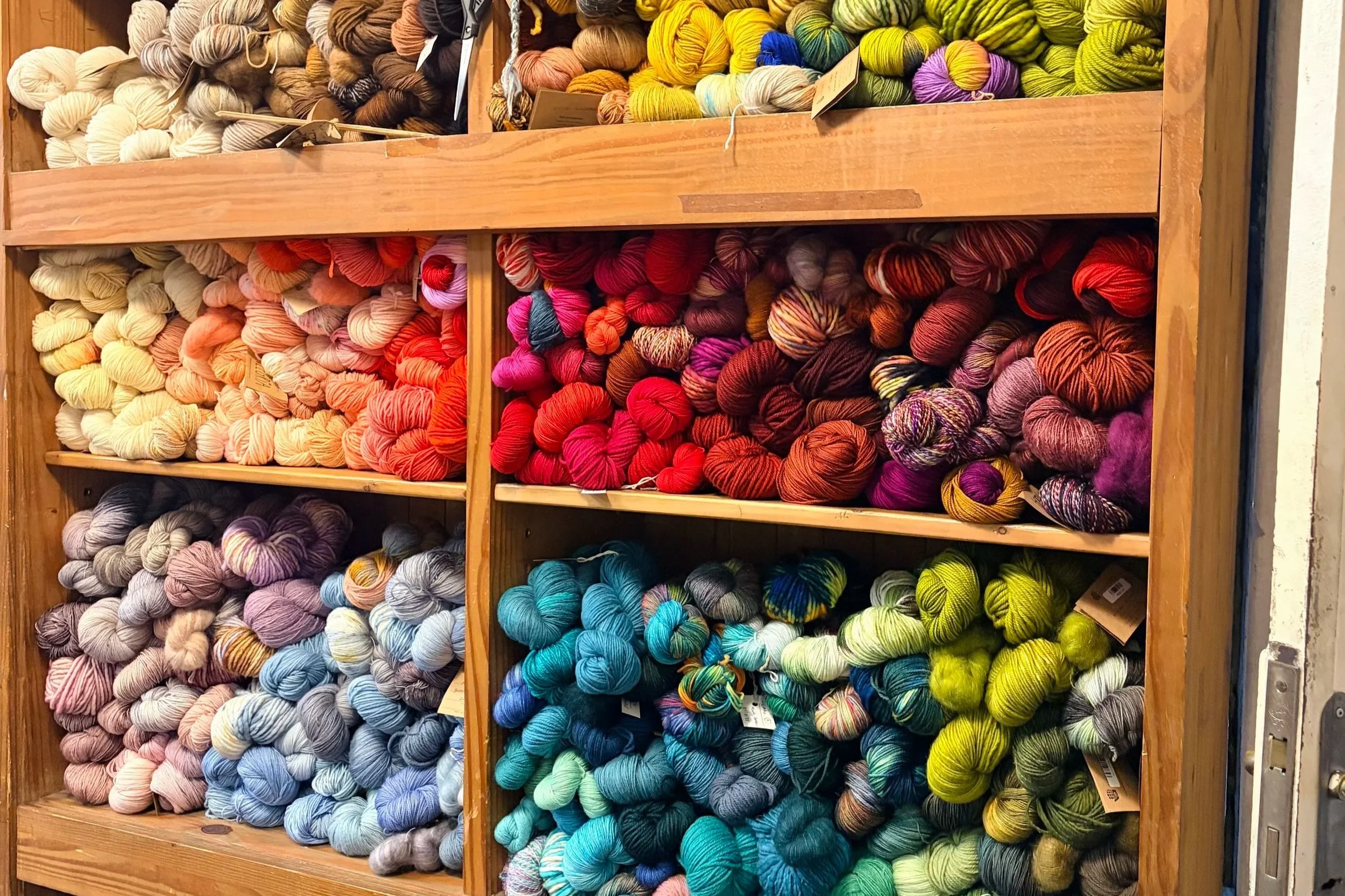
Yarn heaven at the Manos del Uruguay HQ in Montevideo
My first introduction to Manos del Uruguay came when I fell down the knitting rabbit hole and spotted their yarns at my local yarn shop in Montreal. As a devoted hispanophile and lover of all things Latin America, I was immediately curious about this unique company.
A few years later, I was introduced by a friend to Valentina Barreiro and Cecilia Lananne at Manos del Uruguay—the Senior Designer and Head of Yarns, respectively—shortly before my trip to the Southern Cone. I knew I had to take a detour to meet them in person and learn more about this incredible organization.
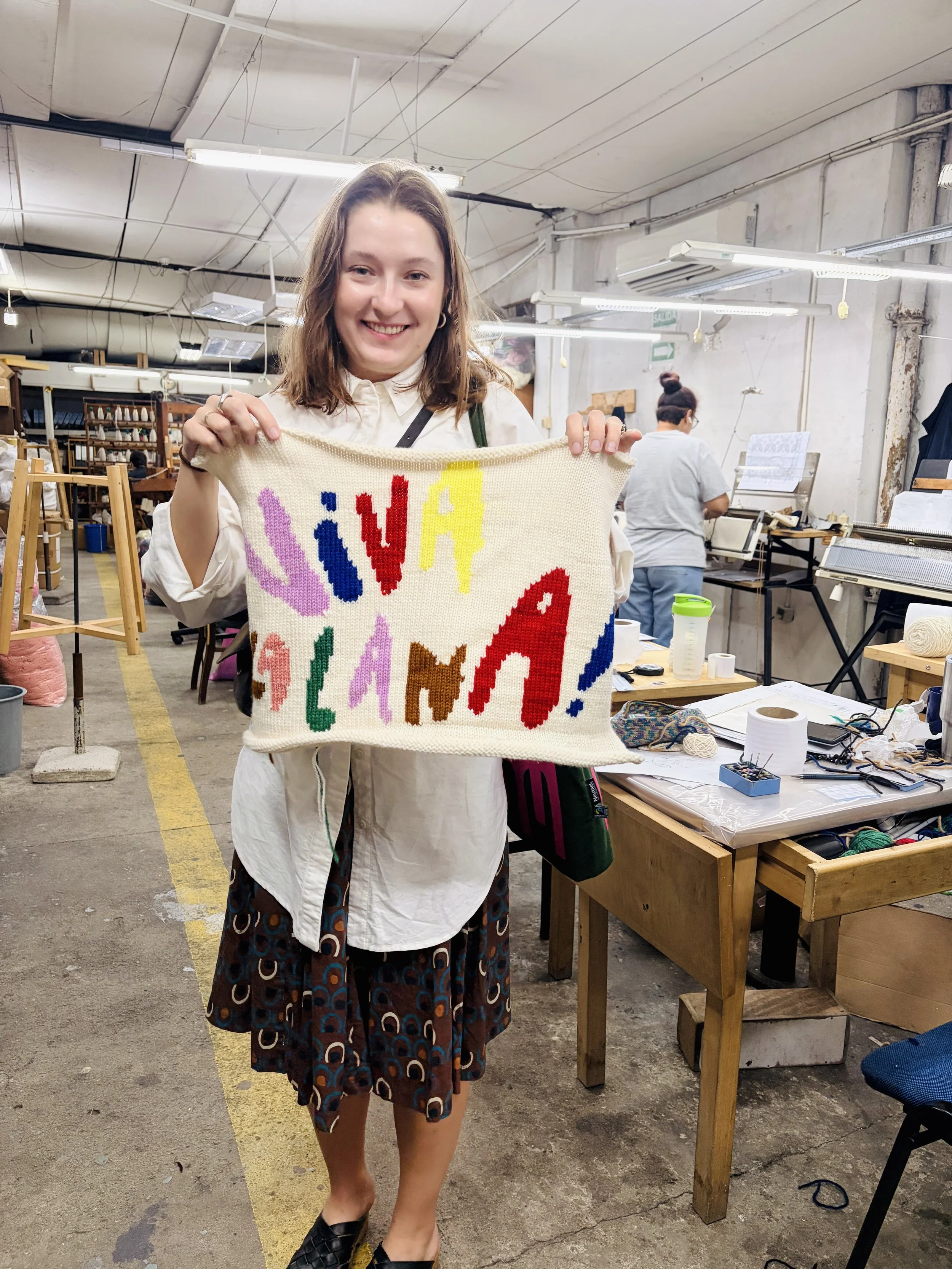
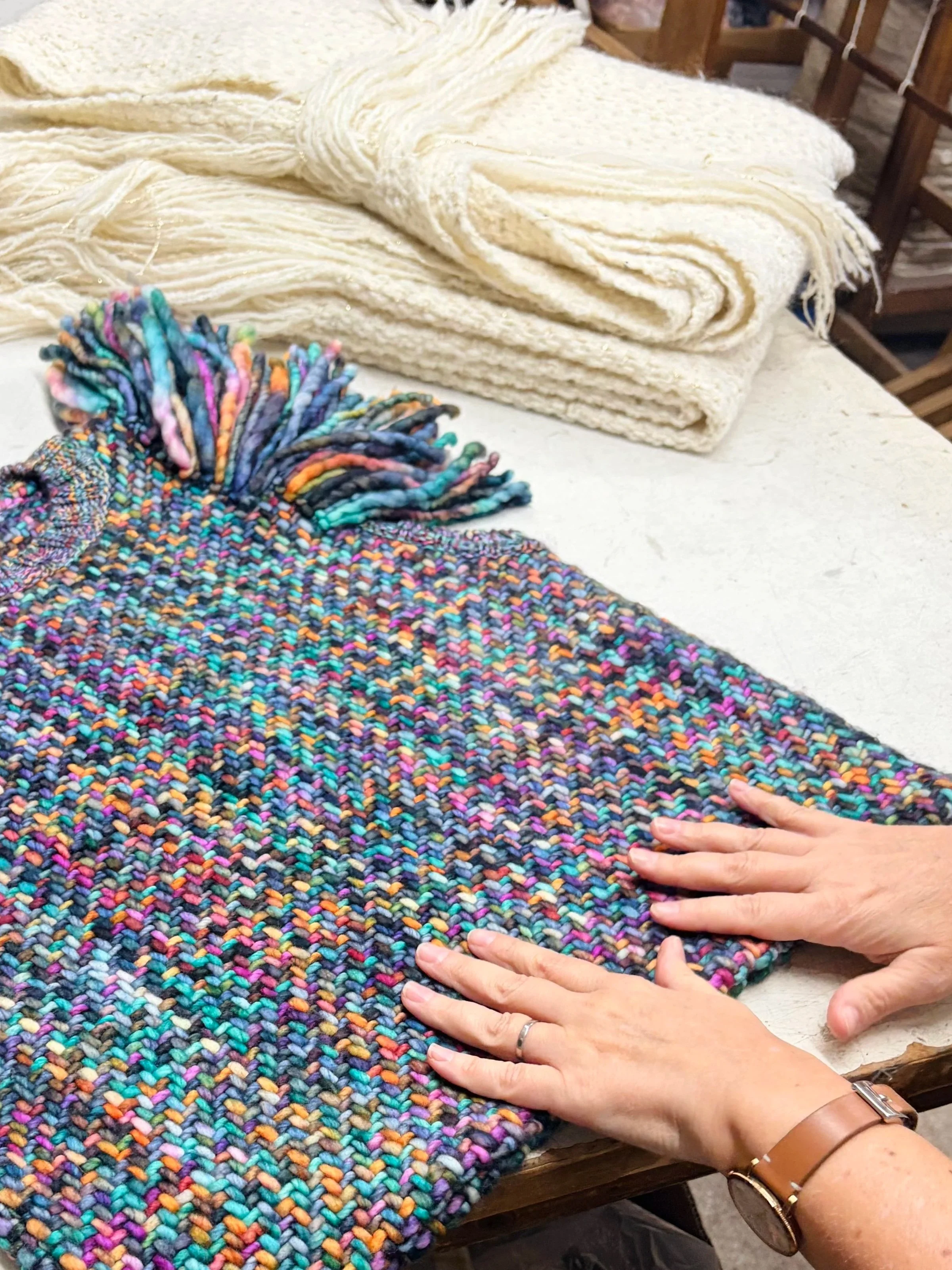
Manos del Uruguay was founded by five friends in 1968, driven by concern over the economic hardships and limited opportunities facing women in rural communities across the country. Their goal was simple: to make blankets, ponchos, and horse saddle pads and provide women in rural areas with reliable sources of income while working with the premium natural materials that beautiful, green Uruguay is known for—most notably its fine sheep’s wool.
The structure of Manos del Uruguay has remained largely unchanged, even as its founders have passed on. It operates as a network of artisan-owned cooperatives located across different regions of the country, each specializing in distinct crafts—from hand knitting and weaving to hand-spinning and dyeing.
Over the decades, the organization has evolved, but it has built its reputation on producing beautifully crafted, high-quality garments that reflect Uruguay’s pastoral, outdoors-loving culture—luxurious knitwear and ruanas (traditional Uruguayan ponchos) that integrate effortlessly into a modern wardrobe. These pieces are marketed both domestically—to locals and visitors alike—and internationally in many different markets.
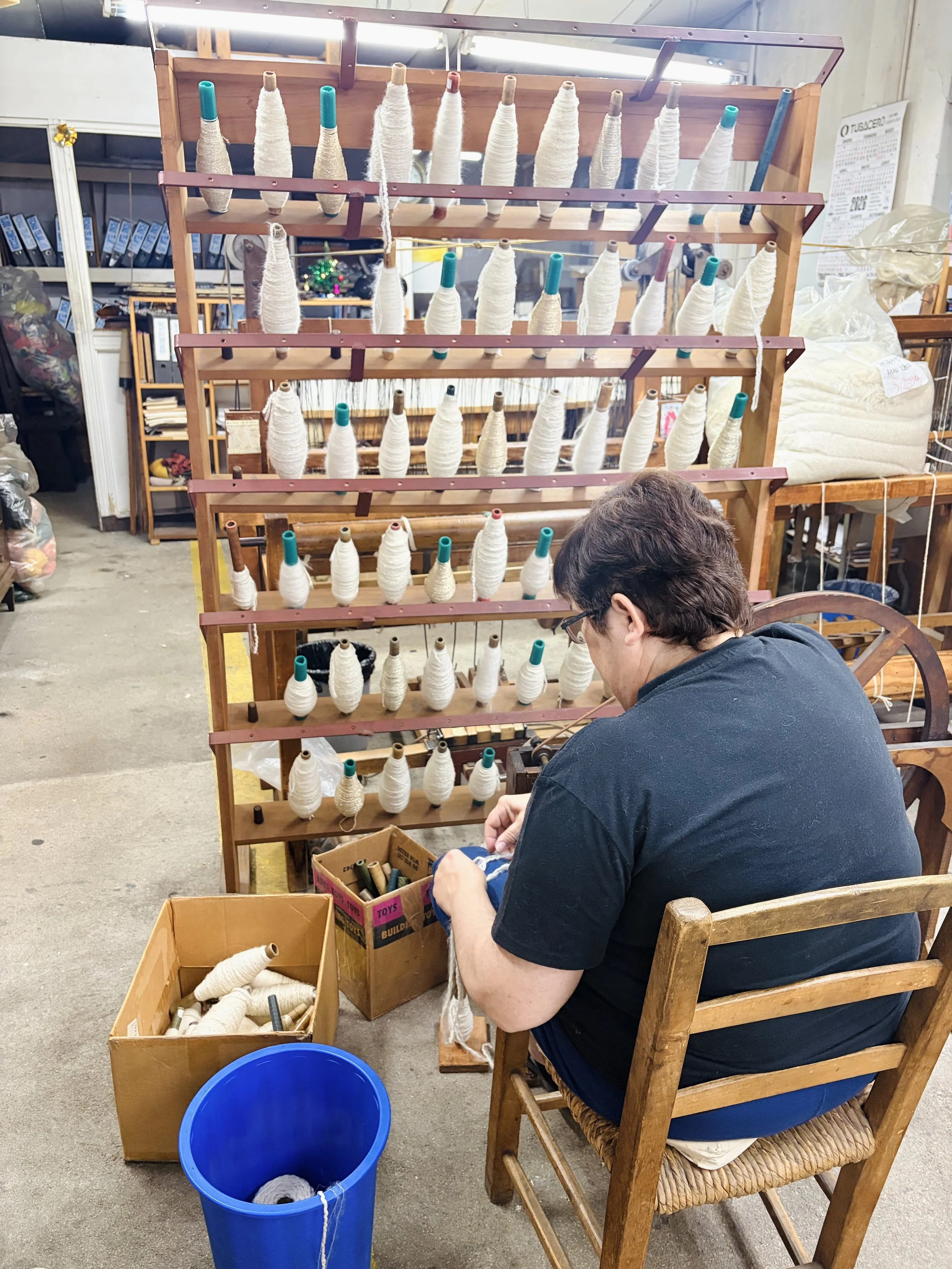
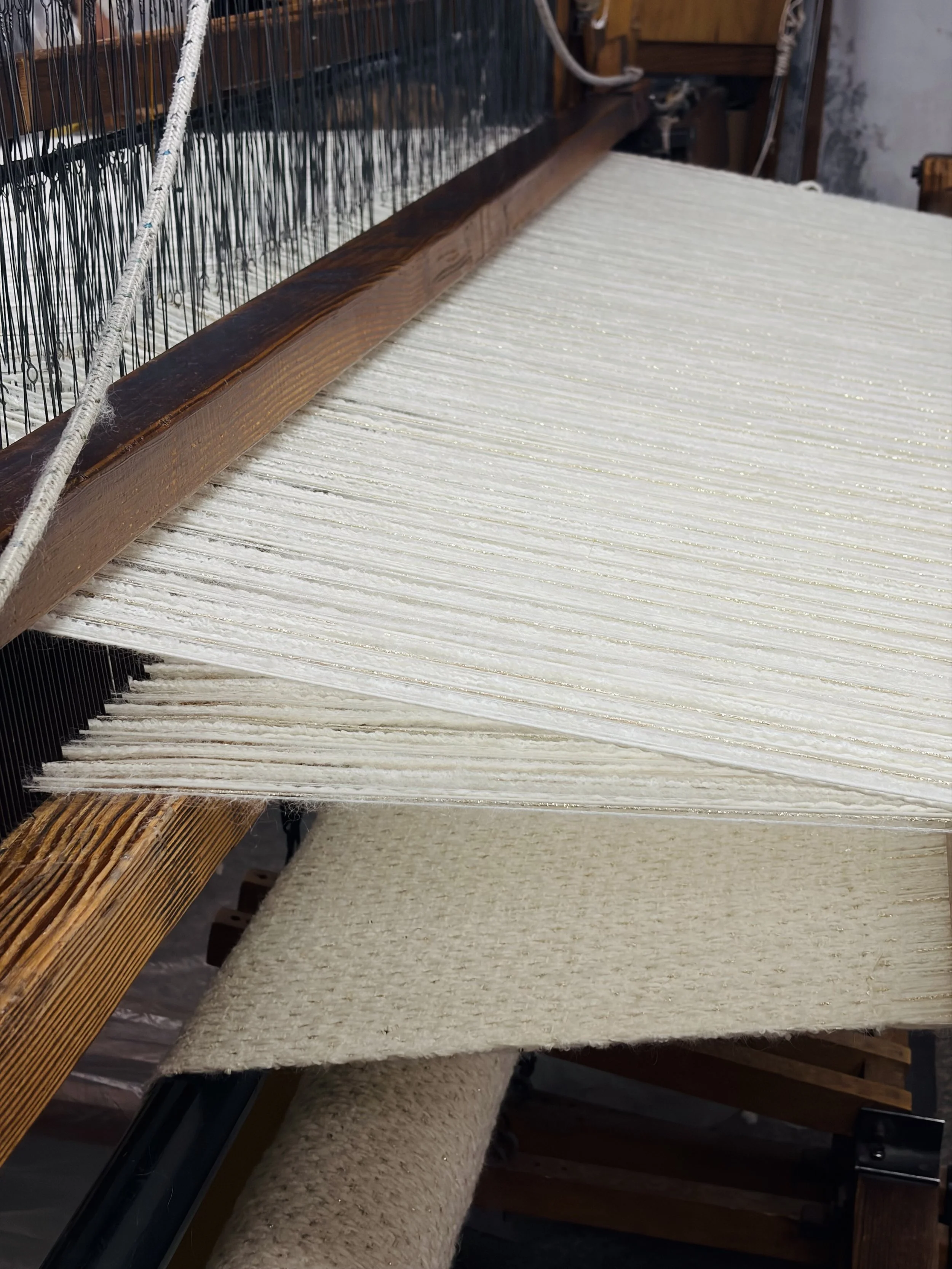
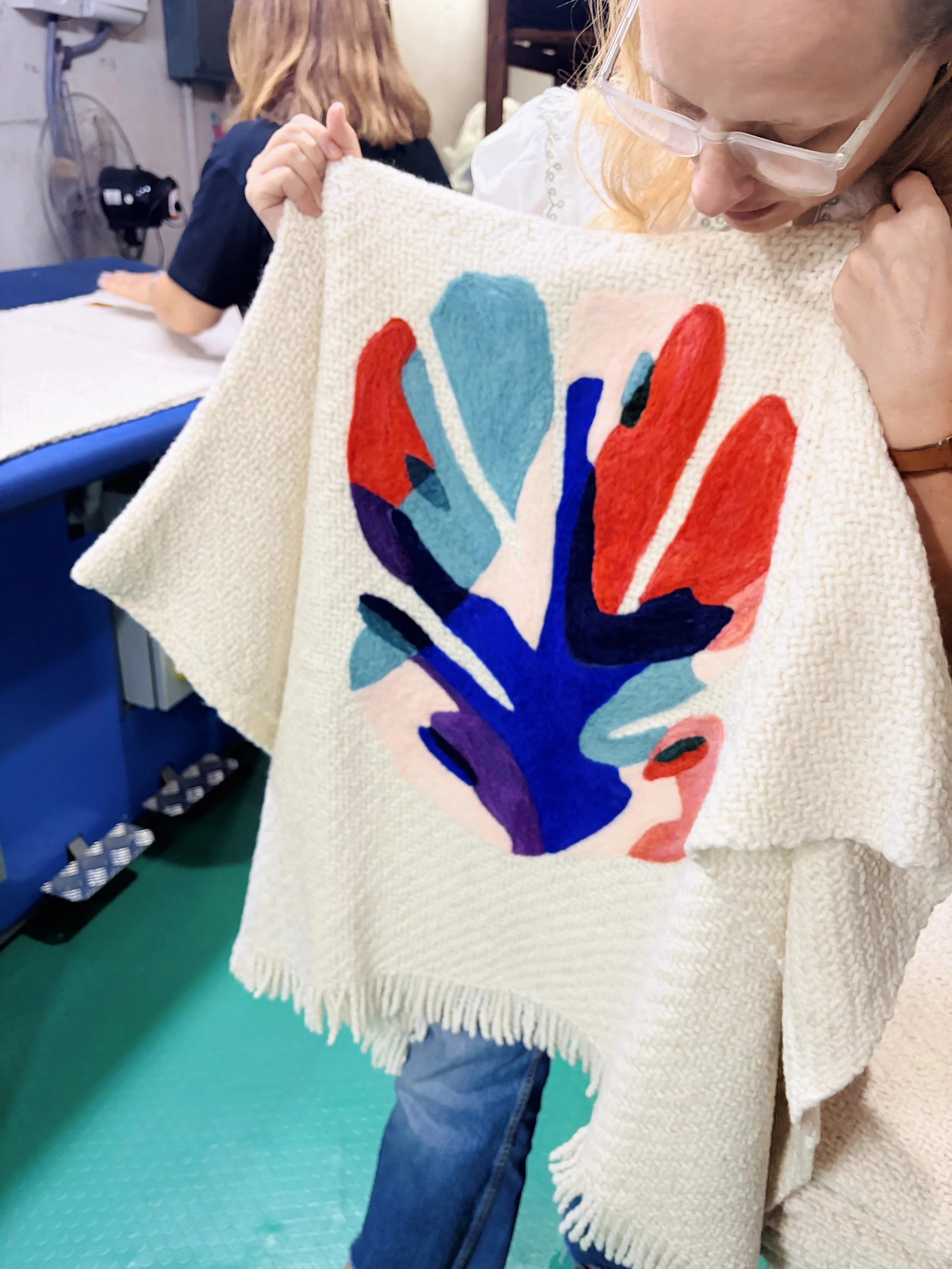
Manos del Uruguay has carved out a firm place as an artisan cooperative that successfully combines handwork with medium-scale production. Along the way, they have collaborated with numerous international fashion houses—Stella McCartney, Polo Ralph Lauren, Dries van Noten, and Marc Jacobs, to name a few.
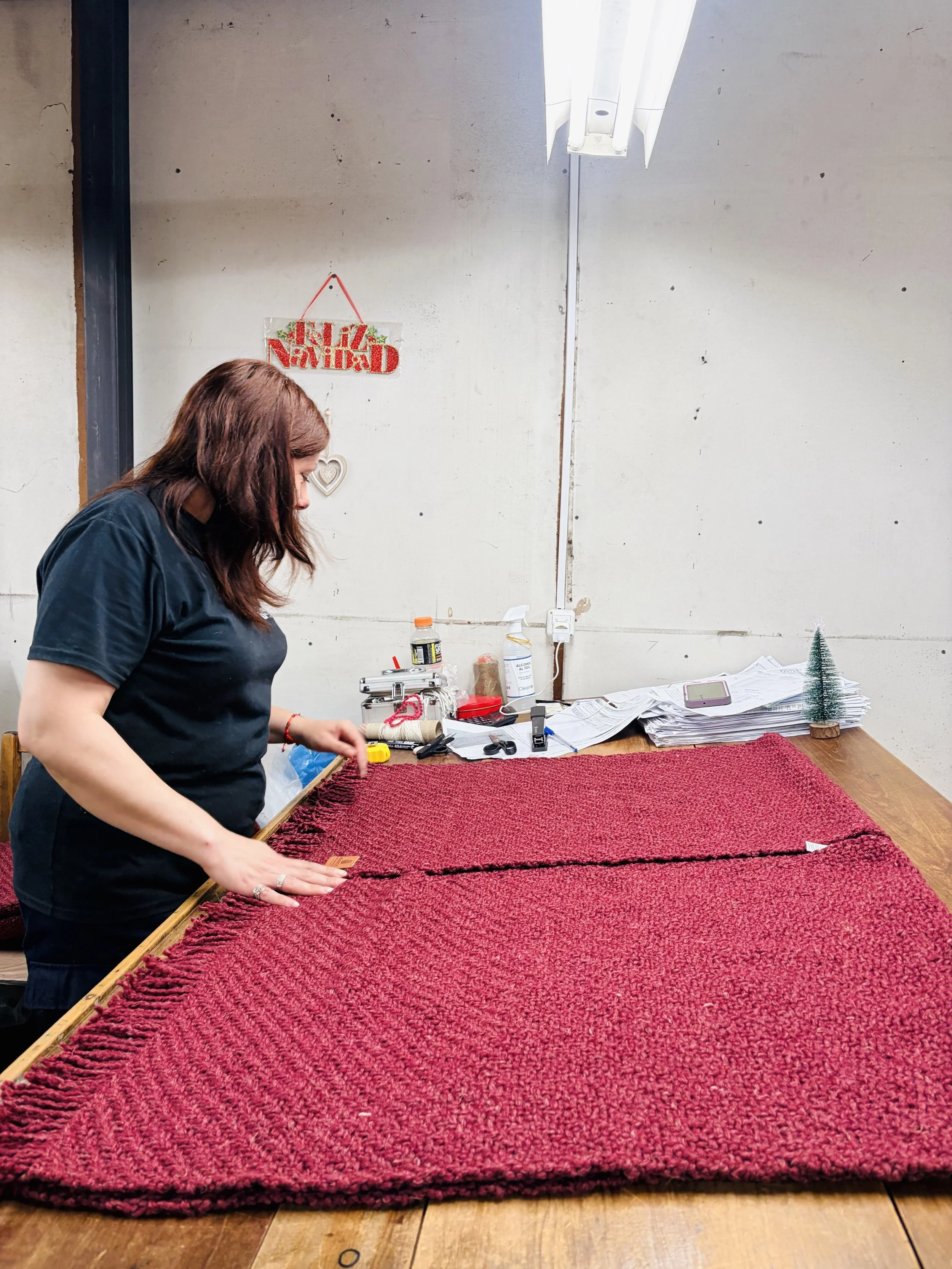
While peeking into the prototyping workshop at the headquarters, I met knitwear and woven designers busy finishing samples for several well-known brands—a reassuring sign that Uruguayan craftsmanship remains as sought-after as ever.
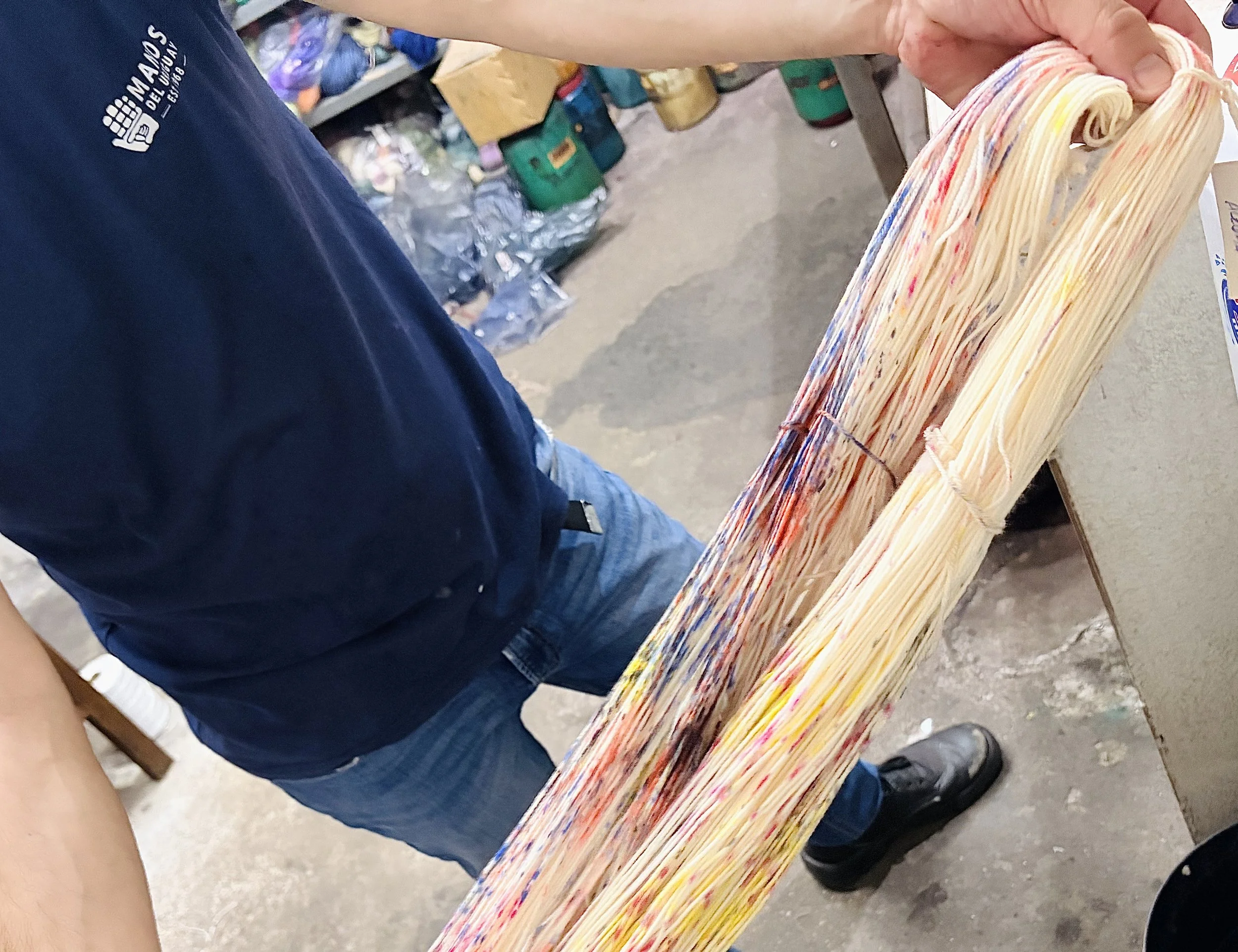
Cecilia Lalanne, my host and guide, has spent much of her career at Manos and recently took over the knitting yarns department (a dream job, if you ask me). As we visited the dyeing room and colour archive, she explained that Manos del Uruguay has become known for its bold, unexpected colour combinations—each one developed by a master in-house colourist and entirely hand-dyed.
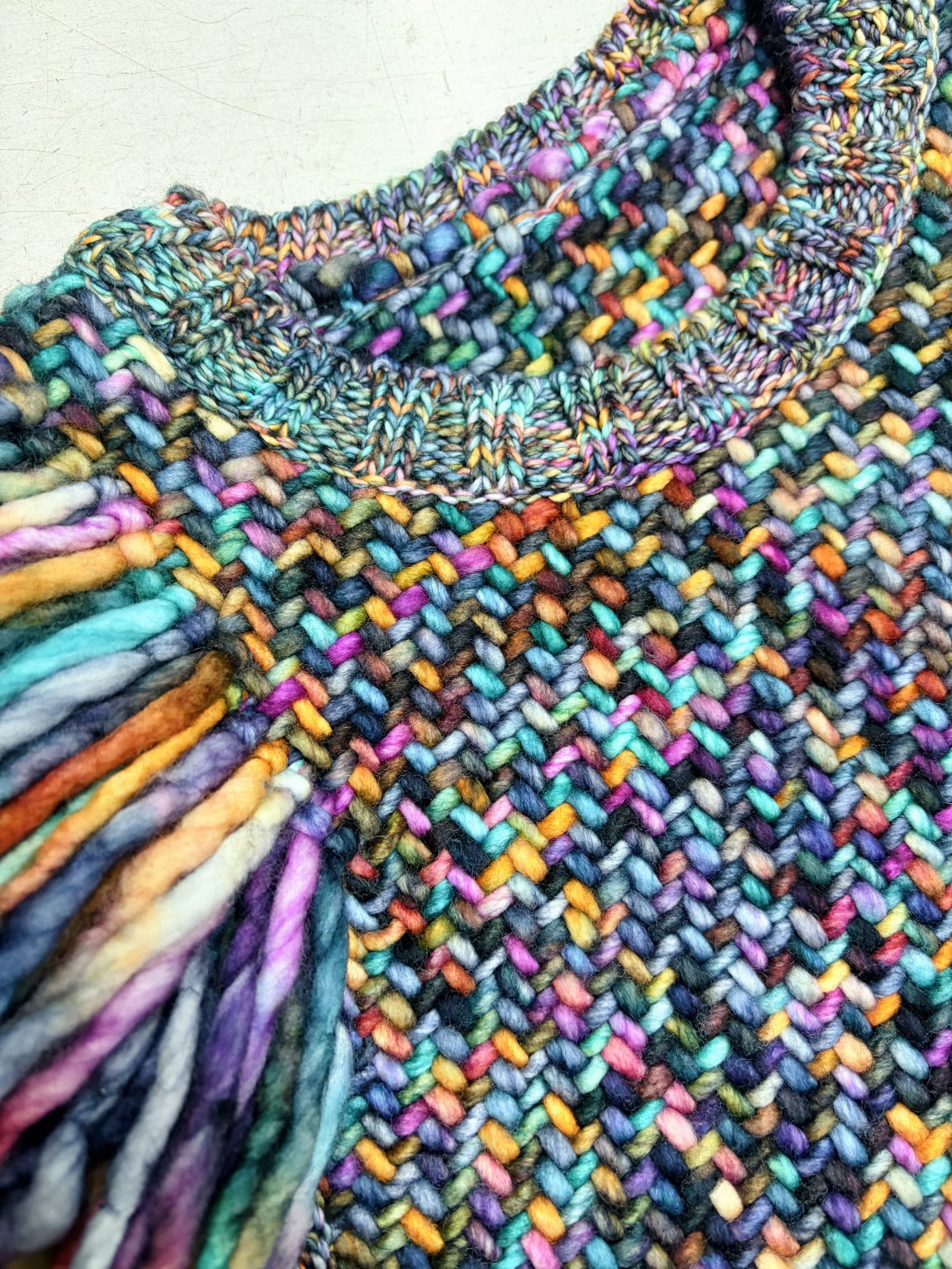
Over time, the company has developed remarkable expertise, allowing for precise colour and technique consistency across dye lots and seasons—a true mark of quality and craftsmanship, and something the team takes great pride in.
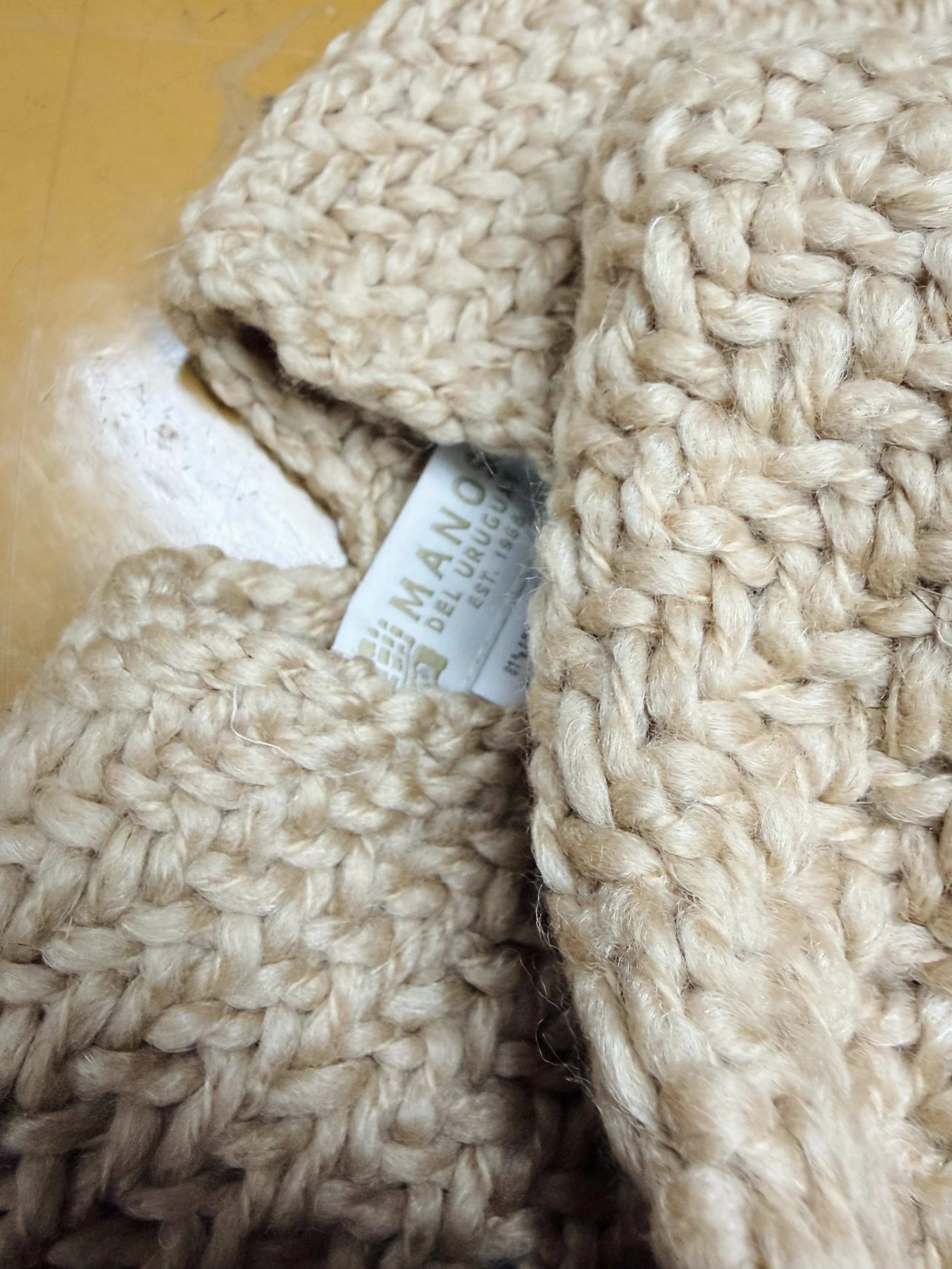
While Manos works with a variety of fibres—from alpaca to cotton—wool reigns supreme. Uruguay, home to 5.3 million sheep, is known for its high animal welfare and land stewardship standards, and Manos del Uruguay’s story is deeply intertwined with the country’s vibrant wool industry. Merino is the most common breed, producing smooth, lustrous, cloud-like yarns and garments, while Corriedale is also widely used, offering a slightly more rustic, textured hand.
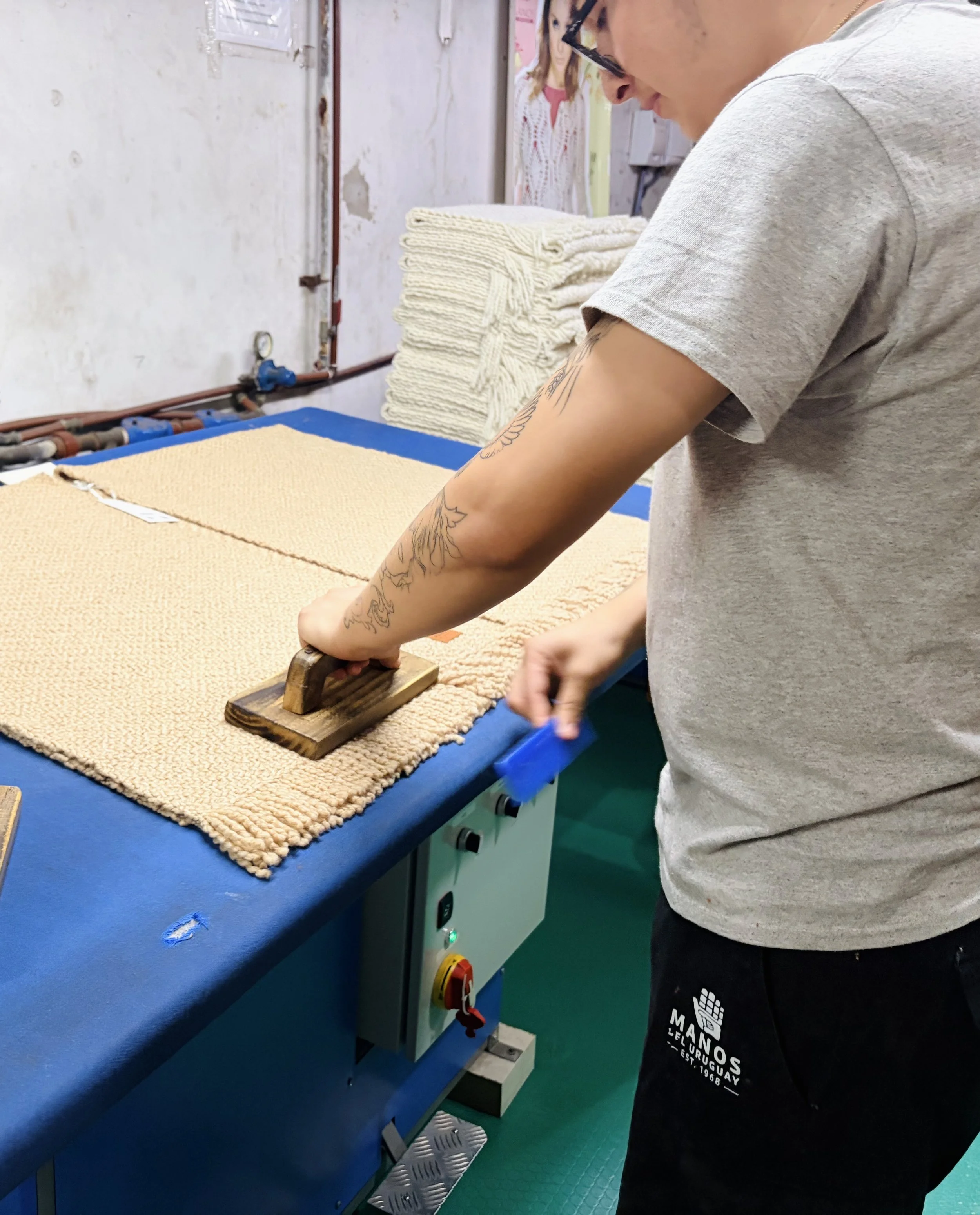
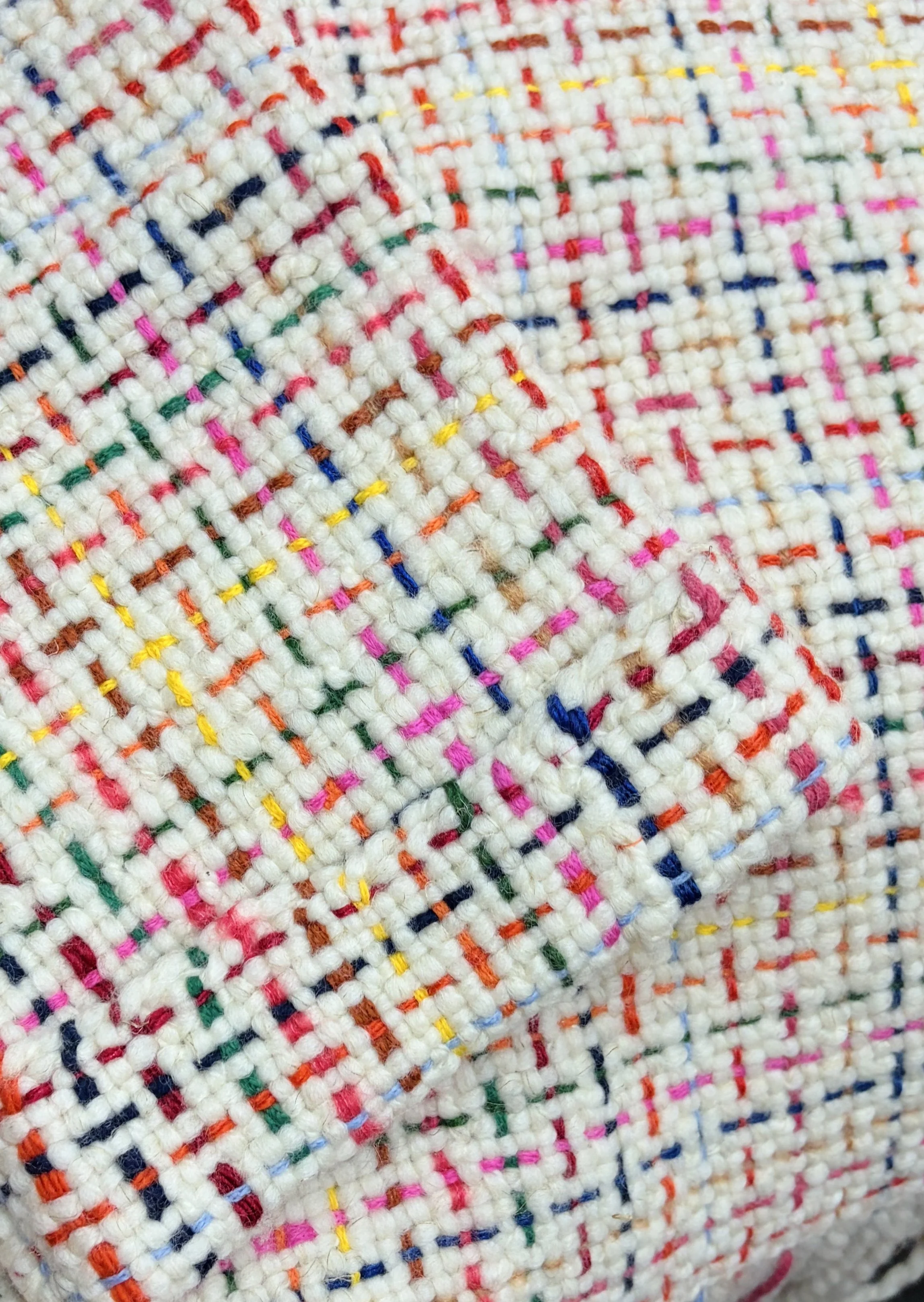
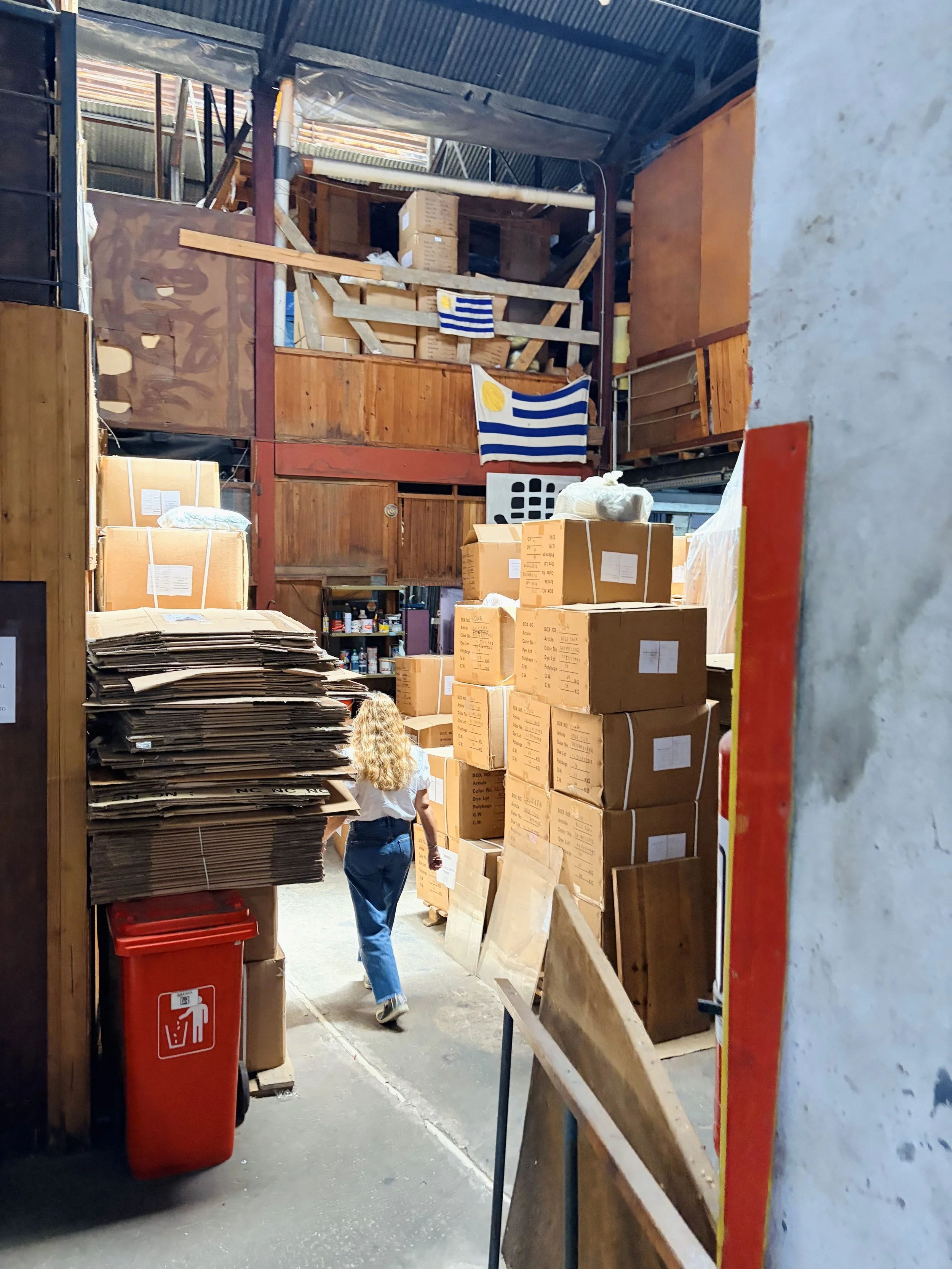
Though firmly rooted in the global crafts and fashion industries, Manos del Uruguay faces a challenge shared by many skill-based craft organizations: attracting younger generations, particularly in rural communities. Many of its most experienced artisans and knowledge holders are nearing retirement age. Cecilia, together with her colleagues, is actively developing strategies to promote textile design, production skills, and even mechanical training among young people—offering on-the-job training and living wages. Since 2009, Manos del Uruguay has also been a member of the World Fair Trade Organization.
Keeping all stages of production local while continuing to grow the business presents another ongoing challenge—especially in spinning. Higher production costs in Uruguay, compared to competitor countries such as Peru, make it difficult for local spinners to remain competitive. Some have even closed, prompting Manos to explore a more vertically integrated business model.
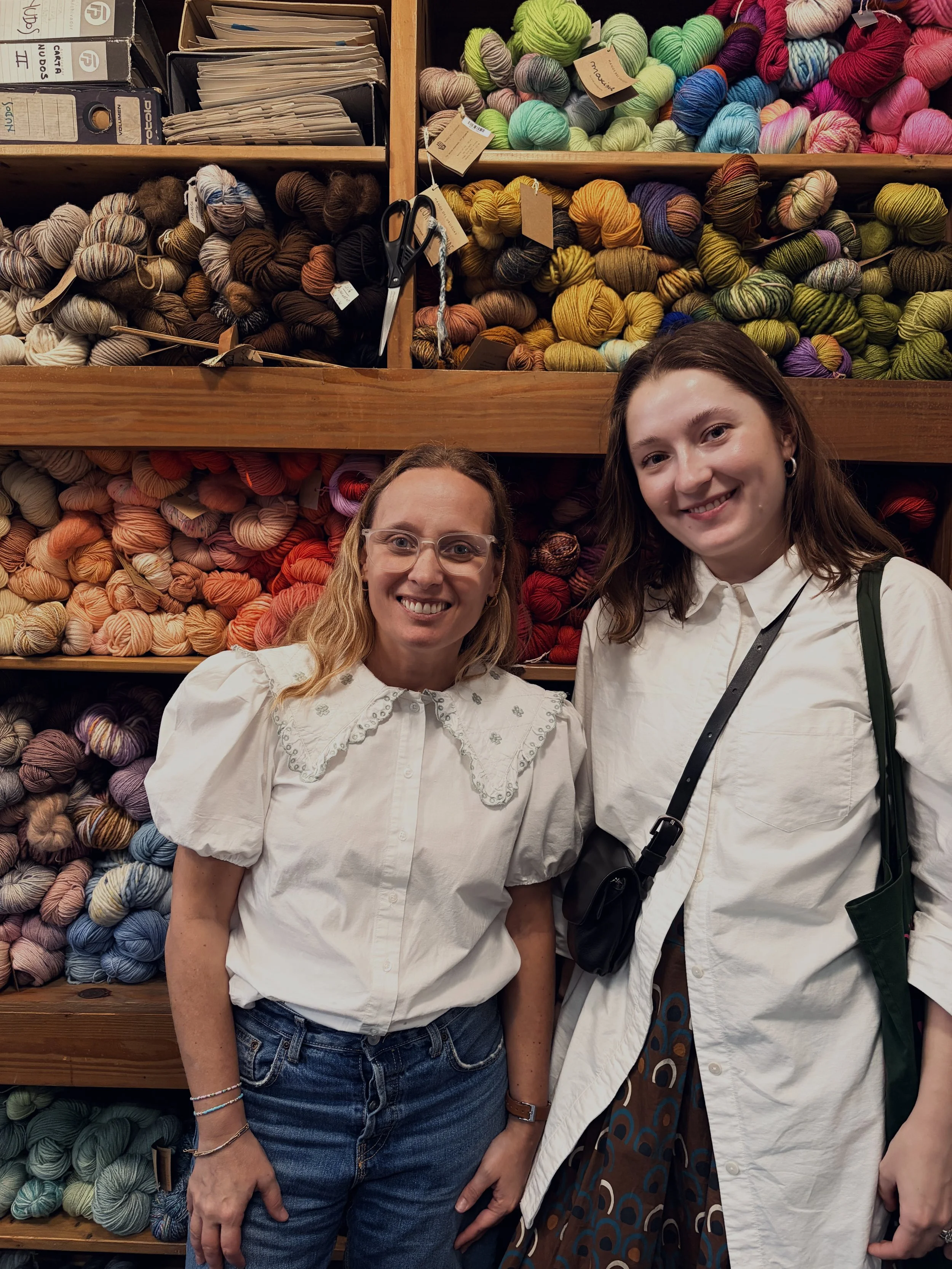
I feel lucky to have had the opportunity to visit Manos del Uruguay in beautiful Montevideo. Muchísimas gracias to Cecilia, Valentina, and their colleagues for welcoming me and showing me around. I left incredibly inspired by our shared love for wool — and with my suitcase stuffed with the beautiful yarns I picked up at their store.
Stay tuned for an opportunity to hear directly from Cecilia on our platform very soon!